
Okay, let’s figure out how to get the right patio table for your outdoor area without a lot of fuss. The simplest way to choose the right size patio table is to measure your available space, consider how many people you typically host, and think about the primary use of the table.
This might seem obvious, but it’s crucial. Don’t just eyeball it. Grab a tape measure and get accurate numbers.
The Footprint Rule
You need more than just the table’s dimensions. People need space to sit down, pull out their chairs, and move around comfortably. A good rule of thumb is to add at least 2-3 feet (60-90 cm) on all sides of where the table will sit for chair pull-out and movement. So, if your table is 3 feet wide, you’ll need at least 7-9 feet of total width for the space it occupies.
Accounting for Obstacles
Are there walls, planters, or built-in seating? Make sure you factor these in. You don’t want a table that’s too wide or too long to fit comfortably, leaving no room to walk past. Consider the swing of doors if your patio is near an entrance.
Visualizing the Size
Once you have your measurements, you can use painter’s tape or even a bedsheet to outline the table’s footprint on your patio. This helps you really see how much space it will take up and if there’s enough room for movement.
When selecting the perfect patio table for your outdoor space, it’s essential to consider not only the size but also the style and material that best suits your needs. For additional insights on outdoor furniture options, you can explore a related article that discusses various collections and styles available, which can help you make a more informed decision. Check it out here: BT Marts Collection of Outdoor Furniture.
Think About How Many People You Need to Seat
This is probably the second most important factor after your available space. Are you typically eating with just your immediate family, or do you frequently host larger gatherings?
Small Gatherings (2-4 People)
For a couple or a small family, a round bistro table (24-30 inches/60-75 cm diameter) works well for coffee or a quick bite. A small square table (30-36 inches/75-90 cm side length) also fits nicely in compact spaces. If you want a bit more elbow room, a rectangular table around 48 inches (120 cm) long can comfortably seat four.
Medium Gatherings (4-6 People)
This is a common size. A round table of 42-48 inches (105-120 cm) diameter or an oval table of similar dimensions can be quite convivial. For rectangular tables, look for something around 60-72 inches (150-180 cm) in length. This gives everyone enough space without feeling cramped.
Large Gatherings (6-8+ People)
If you’re often hosting bigger groups, you’ll need a substantial table. Rectangular tables are usually the best option here, ranging from 72 inches (180 cm) up to 96 inches (240 cm) or even longer. An extendable table can be a real lifesaver, allowing you to shrink the table for daily use and expand it when guests arrive. Oval tables can also work well for larger groups, as they eliminate sharp corners and allow for a more organic seating arrangement.
Seating Standards
Generally, allow about 24-30 inches (60-75 cm) of table edge per person. This isn’t just for their bottom, but for their plate, drink, and elbow room. Don’t forget that if your table has chunky legs, they might interfere with seating comfort, so factor that into your planning.
What’s the Primary Use of the Table?

A dining table has different requirements than a coffee table or a purely decorative piece.
Dining Table
If you’re planning on eating full meals outdoors, you’ll need a table that’s comfortable to sit at for extended periods. This means enough surface area for plates, serving dishes, and drinks. Height is also important – standard dining height is around 28-30 inches (70-75 cm). You also want a surface that’s easy to clean.
Coffee/Cocktail Table
For casual lounging with drinks and snacks, a lower coffee table (16-20 inches/40-50 cm high) is ideal. These are often paired with deep-seated sofas or lounge chairs. They don’t need as much surface area as a dining table but should be large enough to hold a few drinks and a platter of appetizers.
Bistro/Accent Table
These are generally smaller, round tables perfect for a quick cup of coffee or a single plate. They’re great for balconies or small nooks where space is at a premium. They don’t aim to be the center of a large gathering, but rather a functional, often charming, addition.
Work or Hobby Table
If you plan to use your patio table for activities like crafting, reading, or even working on a laptop, consider a surface that’s stable and large enough for your materials. A solid, flat top without too many gaps is usually preferred.
Sure, here is the sentence with the clickable link:
I love to relax in my backyard with beautiful Outdoor Furniture during the summer.
Consider the Shape of the Table
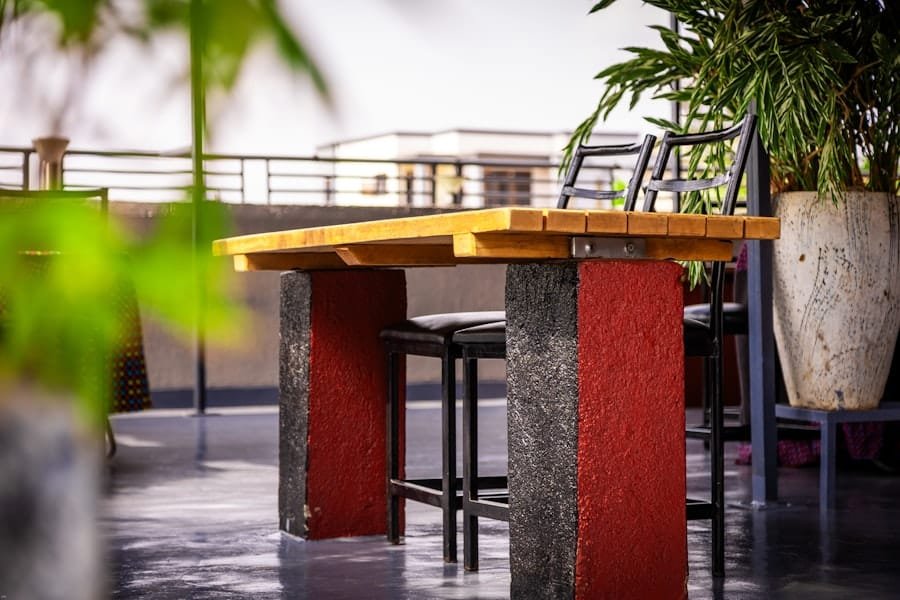
The shape isn’t just about aesthetics; it impacts how people interact and how it fits into your space.
Rectangular Tables
- Pros: Very efficient for seating large numbers of people in a neat row. Great for long, narrow patios. Easy to push against a wall when not in use (if one side is not used for seating).
- Cons: Can feel a bit formal. Can create visual “dead space” at the ends if not fully utilized.
- Best For: Large families, frequent entertaining, long patios, formal dining.
Square Tables
- Pros: Good for intimate conversations among 2-4 people. Visually balanced. Can be pushed together to form a larger rectangular table if you buy two.
- Cons: Not ideal for more than 4 people, as conversations across the table can become difficult.
- Best For: Small families, intimate dining, square patios, balconies.
Round Tables
- Pros: Promotes conversation as everyone can see each other. No sharp corners, making them safer and better for movement in tighter spaces. Can often fit more people into a given area than a square or rectangular table of similar overall footprint because there are no corners to block.
- Cons: Can be less efficient for serving multiple dishes. May not fit as neatly into a rectangular space.
- Best For: Casual dining, encouraging interaction, smaller or irregularly shaped patios, families with young children.
Oval Tables
- Pros: A good compromise between round and rectangular. Offers the conversational benefits of a round table but can seat more people like a rectangular one. Softens the look of a patio.
- Cons: Can be harder to find matching covers or tablecloths.
- Best For: Medium to large groups, where you want a blend of formality and casual interaction, slightly larger patios.
When selecting the perfect patio table, it’s essential to consider not only the size but also the durability of the furniture, especially if you live in an area prone to harsh weather conditions. For insights on how to choose resilient outdoor furniture that can withstand the elements, you might find this article on floodproof innovations particularly helpful. By understanding both the size and material of your patio table, you can create a comfortable and stylish outdoor space that lasts for years.
Material Matters (Briefly)
While not directly about size, the material can influence your choice and expectations for the table. A heavy stone table, for instance, might be harder to move than an aluminum one, which could impact how you utilize flexible spaces.
Common Materials and Considerations:
- Aluminum: Lightweight, rust-resistant, good for easy rearrangement.
- Wrought Iron/Steel: Heavy, durable, can be ornate. Less likely to blow away in high winds.
- Teak/Wood: Classic look, durable with proper maintenance, can be heavy. Consider how well it holds up to sun and rain.
- Resin/Wicker: Lightweight, often weather-resistant, can offer a natural look.
- Stone/Concrete: Very heavy, extremely durable, often fixed in place. Requires a very strong patio surface.
Think about how much maintenance you’re willing to do, how important weight is (if you plan to move it around), and how it stands up to your local weather.
Don’t Forget About Storage and Expandability
Expandable Tables
If you often have fluctuating guest numbers, an extendable table is a brilliant solution. Many rectangular and oval tables come with leaf inserts or butterfly mechanisms that allow you to increase the seating capacity when needed and shrink it back down for everyday use. This is a great way to maximize flexibility without committing to a giant table all the time.
Foldable Options
For very small patios or balconies, or if you need to store your furniture away during off-season, foldable tables (especially bistro style) are incredibly practical. They can be tucked away easily when not in use, freeing up valuable space.
Stackable Chairs
While not about the table itself, thinking about stackable chairs can also help with space management. If you opt for a table that seats 6, but only use it for 2 most of the time, having stackable chairs means you can store the extras discreetly.
Bringing it All Together: A Checklist
To make sure you’ve covered all your bases, here’s a quick run-down:
- Measure Your Space Accurately: Not just the table area, but the 2-3 feet clearance zone around it.
- Count Your Typical Guests: How many people usually sit at this table? How many occasionally?
- Define Primary Use: Is it for dining, lounging, or just decoration?
- Consider Table Shape: Rectangular, square, round, or oval – which fits your space and social style best?
- Think About Height: Dining, counter, or bar height?
- Material Preference: Factor in weight, durability, and maintenance.
- Storage/Expandability Needs: Do you need it to grow or shrink?
- Budget: Don’t forget this! It can often narrow down your choices quickly.
By systematically going through these points, you’ll be well on your way to selecting a patio table that not only looks good but genuinely works for your outdoor lifestyle. It’s about finding that sweet spot between functional space, comfort, and the overall vibe you want to create.
FAQs
1. What factors should I consider when choosing the right size patio table for my space?
When choosing the right size patio table for your space, consider the dimensions of your patio or outdoor area, the number of people you want to accommodate, and the intended use of the table (e.g., dining, lounging, or entertaining).
2. How do I measure my outdoor space to determine the appropriate size for a patio table?
To measure your outdoor space for a patio table, use a tape measure to determine the length and width of the area where the table will be placed. Consider leaving enough space around the table for chairs and for easy movement.
3. What are the standard sizes for patio tables?
Standard sizes for patio tables vary, but common dimensions for rectangular tables range from 28 inches to 42 inches in width and 48 inches to 72 inches in length. Round tables typically range from 36 inches to 60 inches in diameter.
4. How many people can typically be seated at different sizes of patio tables?
The number of people that can be seated at a patio table depends on its size and shape. A 36-inch round table can typically seat 4 people, while a 72-inch rectangular table can seat 6 to 8 people.
5. What are some tips for choosing the right size patio table for a small outdoor space?
For a small outdoor space, consider a bistro or bar-height table, which takes up less floor space. Additionally, opt for a round table, which allows for easier movement around the table in a confined area.